
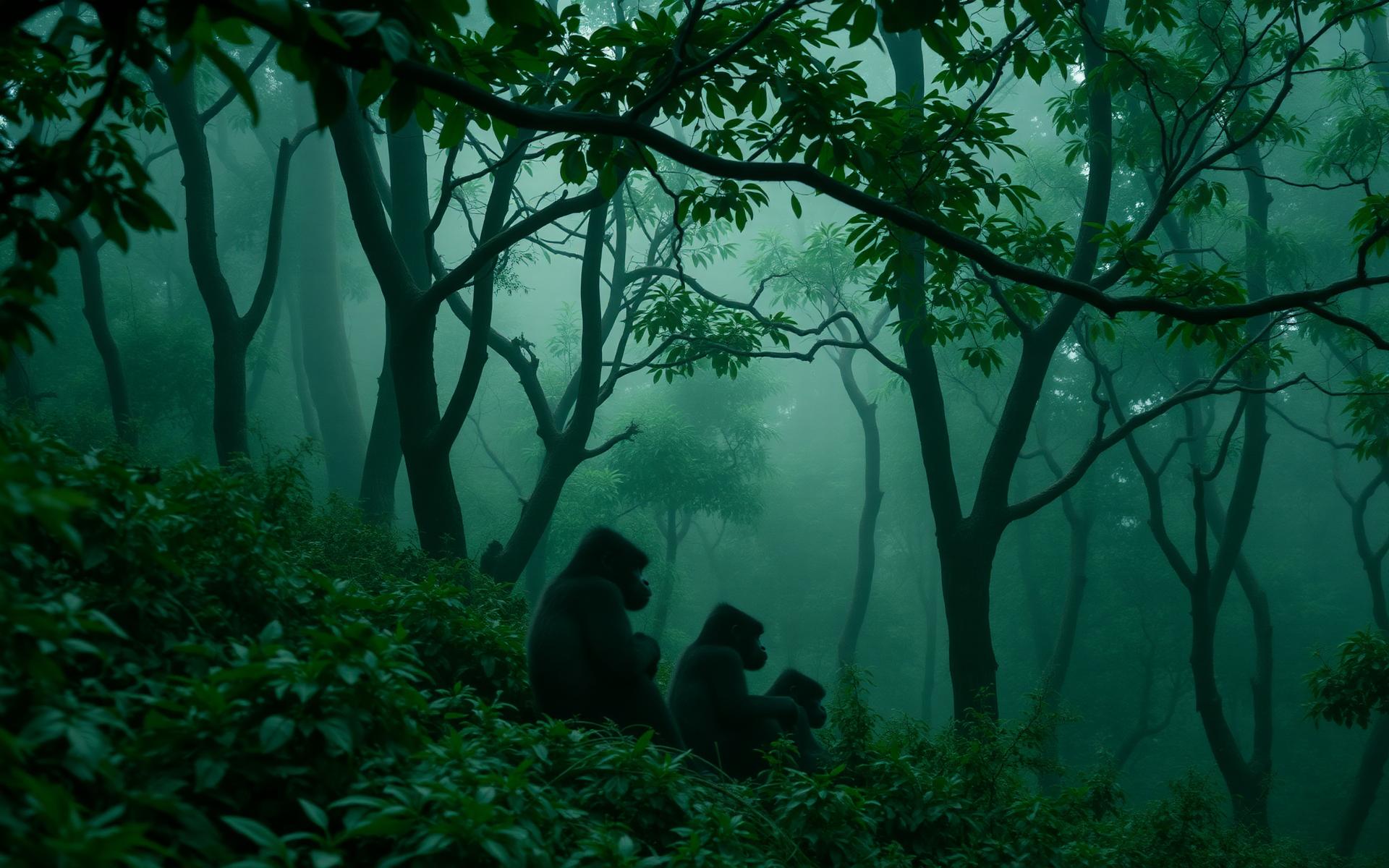
Mountain gorilla trekking, honestly explained.
What it costs, how hard it is, when to go — the answers we give travellers on the phone, written down.
One hour with a family that shares 98.4% of your DNA.
Both Uganda and Rwanda run their gorilla programmes on a strict one-hour visit policy. A trained ranger team of eight — trackers, guides, an armed scout — leads a group of no more than eight visitors into the forest to find one habituated family. Once you reach them, a stopwatch starts.
The gorillas are wild. They will feed, groom, argue, and occasionally walk right up to you. The rangers keep a seven-metre distance for everyone's safety; masks are required (a health measure introduced in 2020 that has stayed). Then the hour ends, you walk out, and the forest closes behind you.
Two options, one animal.
Uganda — Bwindi & Mgahinga
The habituation experience (USD 1,500, 4 hours) is only in Uganda. Sector choice matters — we match your fitness to the right one.
Rwanda — Volcanoes NP
Shorter transfer, higher-end lodging, and Kwita Izina (annual naming ceremony) each September.
A trek, hour by hour.
Frequently asked.
How much is a gorilla permit?+
Uganda: USD 800 per person for one hour with a habituated family (foreign non-resident, 2024 pricing). Rwanda: USD 1,500. Uganda also offers a full-day 'habituation experience' at USD 1,500. Zenvoy pre-purchases permits — the price is fixed on our invoice.
How fit do I need to be?+
Moderate hillwalking fitness. Treks in Bwindi range from two to eight hours across steep, muddy, dense forest. Ruhija and Buhoma sectors have shorter average distances; Nkuringo and Rushaga are steeper. In Rwanda, Volcanoes treks are generally shorter but higher in altitude.
What's the minimum age?+
Fifteen in both Uganda and Rwanda. This is strictly enforced at the briefing.
When is the best time to go?+
Dry seasons — June to September and December to February — give firmer trails and clearer skies. The wet months (March–May, October–November) mean muddier ground but greener forest, easier permit availability and lower lodge rates.
What is the habituation experience?+
In Bwindi's Rushaga sector, Uganda offers a full-day, four-hour visit with a semi-habituated family. You are with the trackers and researchers, closer to how the initial habituation is done. Group size is capped at four visitors.
Will I definitely see the gorillas?+
In our eight years of operation, every Zenvoy trek has found its assigned family. Trackers set out at dawn to locate the group before travellers arrive at the trailhead. Success is close to 99% across both countries.
What should I pack?+
Long trousers, long-sleeved shirt, sturdy waterproof hiking boots, gaiters, gardening gloves for gripping vegetation, a light rain jacket, a small daypack and 2L of water. Porters are available at the trailhead (USD 20 tip is standard and directly funds community jobs).
Ready to book a permit?
We hold advance permit inventory for every month of the year — tell us your dates and we confirm within twenty-four hours.